
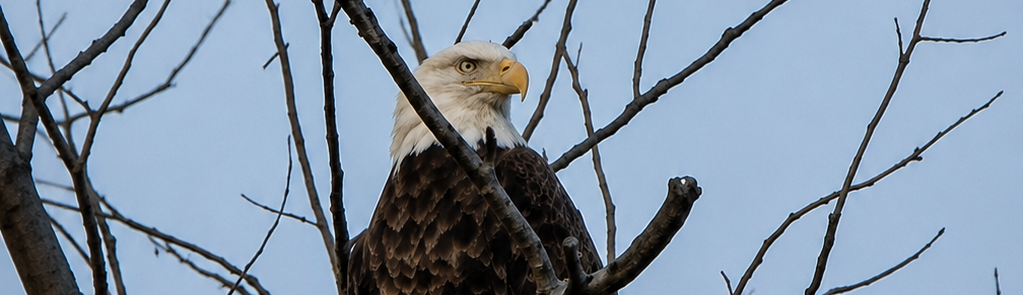
The Return of the Bald Eagle: A Conservation Success Story Along Lake Erie and Angola, New York
Few wildlife stories in Western New York are as inspiring as the remarkable return of the Bald Eagle. Today, seeing America's national bird soaring above the waters of Lake Erie near Angola, Evangola State Park, Sturgeon Point, or the Buffalo shoreline is becoming an increasingly common and unforgettable sight. For longtime residents, however, the presence of Bald Eagles is something they never expected to witness again. Just a few decades ago, these magnificent birds had nearly disappeared from New York and much of the Great Lakes region.
The resurgence of the Bald Eagle is one of North America's greatest conservation success stories. Through habitat protection, environmental restoration, the banning of harmful pesticides, and decades of dedicated wildlife management, the Bald Eagle has reclaimed its place along the shores of Lake Erie. Visitors exploring Angola on the Lake today may be fortunate enough to watch an eagle glide effortlessly above the shoreline, perch high in a mature tree overlooking the lake, or dive toward the water in search of fish, a breathtaking reminder of nature's ability to recover when given the opportunity.
When Bald Eagles Nearly Disappeared
Before the mid-1900s, Bald Eagles were common throughout Western New York. Large forests surrounding Lake Erie, the Niagara River, inland wetlands, and major waterways provided ideal nesting habitat, while abundant fish populations supplied a reliable food source. Eagles nested near lakes, rivers, marshes, and coastal forests across the region.
By the 1950s and 1960s, however, Bald Eagle populations had collapsed. The widespread use of the pesticide DDT caused eggshells to become dangerously thin, preventing successful reproduction. Industrial pollution, habitat loss, shoreline development, and human disturbance further accelerated their decline. By 1976, New York had only a single active Bald Eagle nesting pair remaining, placing the species on the brink of disappearing from the state.
A Remarkable Recovery Begins
The turning point came after DDT was banned in 1972, followed by protection under the Endangered Species Act and the launch of New York's Bald Eagle Restoration Program in 1976. Wildlife biologists carefully introduced young eagles into suitable habitats, monitored nesting sites, and protected important breeding areas throughout the state. These efforts, combined with cleaner waterways and healthier fish populations, allowed Bald Eagles to slowly recover.
The results exceeded expectations. By 1989, New York had successfully restored enough breeding pairs to meet its recovery goals, and Bald Eagle numbers have continued to increase ever since. Today, more than 170 nesting pairs are found throughout New York State, and the species has been removed from the federal endangered species list thanks to one of the most successful wildlife restoration programs in American history.
The Return to Lake Erie
As Bald Eagle populations expanded across New York, Ohio, Pennsylvania, and Ontario, they naturally began recolonizing the Lake Erie shoreline. The lake once again offered exactly what eagles need to thrive: abundant fish, mature shoreline trees, protected wetlands, quiet nesting areas, and miles of undeveloped waterfront.
Lake Erie is now considered one of the finest Bald Eagle habitats in the Great Lakes. Eagles patrol the shoreline year-round, feeding primarily on fish but also scavenging waterfowl and other wildlife when opportunities arise. The combination of open water and extensive coastal habitat has allowed eagle populations to expand steadily throughout the region.
Bald Eagles Around Angola on the Lake
Today, visitors to Angola on the Lake regularly report Bald Eagle sightings along the Lake Erie shoreline. Eagles are often observed soaring above the lake, gliding along the bluffs, or perched high in mature trees overlooking the water. Their six- to eight-foot wingspan and distinctive white head and tail make adult birds unmistakable.
Evangola State Park has become one of the area's most reliable locations for observing Bald Eagles. The park's towering shale bluffs, mature forests, and expansive shoreline provide ideal hunting and resting habitat. Park visitors and campers frequently report seeing eagles flying low over the lake or circling above the cliffs, and the park even hosts guided Bald Eagle walks to celebrate the species' return.
Where to See Bald Eagles Near Angola
- Evangola State Park
- Angola on the Lake shoreline
- Sturgeon Point
- Wendt Beach Park
- Cattaraugus Creek
- Buffalo Harbor and Outer Harbor
- Buffalo River
- Niagara River
- Grand Island
- Tifft Nature Preserve
Although Bald Eagles can be seen throughout the year, winter and early spring often provide the best viewing opportunities because the leafless trees make perched birds easier to spot and open water attracts fish and waterfowl.
Why Lake Erie is Ideal Eagle Habitat
Lake Erie offers nearly everything a Bald Eagle requires for survival. Healthy fish populations provide a dependable food source, while mature cottonwoods, oaks, sycamores, and other large trees offer excellent nesting and roosting sites. The region's marshes, creeks, beaches, and protected coastal habitats create a rich ecosystem that supports eagles throughout every season.
Unlike many birds of prey, Bald Eagles often return to the same nesting territories year after year, adding sticks to their enormous nests until they can reach several feet deep and weigh hundreds of pounds. These impressive structures are often built high in large shoreline trees overlooking open water.
A Symbol of Environmental Recovery
The return of the Bald Eagle represents far more than the recovery of a single species. It reflects decades of improvements in water quality, fish populations, habitat conservation, and environmental stewardship throughout the Great Lakes. Cleaner waterways have benefited countless species of birds, mammals, fish, and other wildlife that share the Lake Erie ecosystem.
For many residents, seeing a Bald Eagle soaring above Angola on the Lake serves as a powerful reminder that conservation efforts truly make a difference. A bird that was once nearly lost now thrives once again along the same shoreline where it nested centuries ago.
Watching Bald Eagles Responsibly
Bald Eagles are protected under both federal and state law. Visitors should always observe them from a respectful distance, avoid disturbing nests, and use binoculars or telephoto lenses for photography. Remaining quiet and allowing the birds to behave naturally provides the best viewing experience while helping protect these magnificent raptors for future generations.
The Future Looks Bright
The Bald Eagle's return to Angola on the Lake and the Lake Erie shoreline is one of Western New York's greatest wildlife success stories. Thanks to decades of conservation work, healthy ecosystems, and continued habitat protection, these magnificent birds once again soar over Lake Erie as they did hundreds of years ago.
Whether you're hiking the trails at Evangola State Park, relaxing on the beach, boating across Lake Erie, or simply enjoying a sunset along the shoreline, keep your eyes on the sky. You may be rewarded with the unforgettable sight of a Bald Eagle gliding effortlessly above the water, a living symbol of the resilience of nature and the enduring beauty of the Lake Erie coast.